




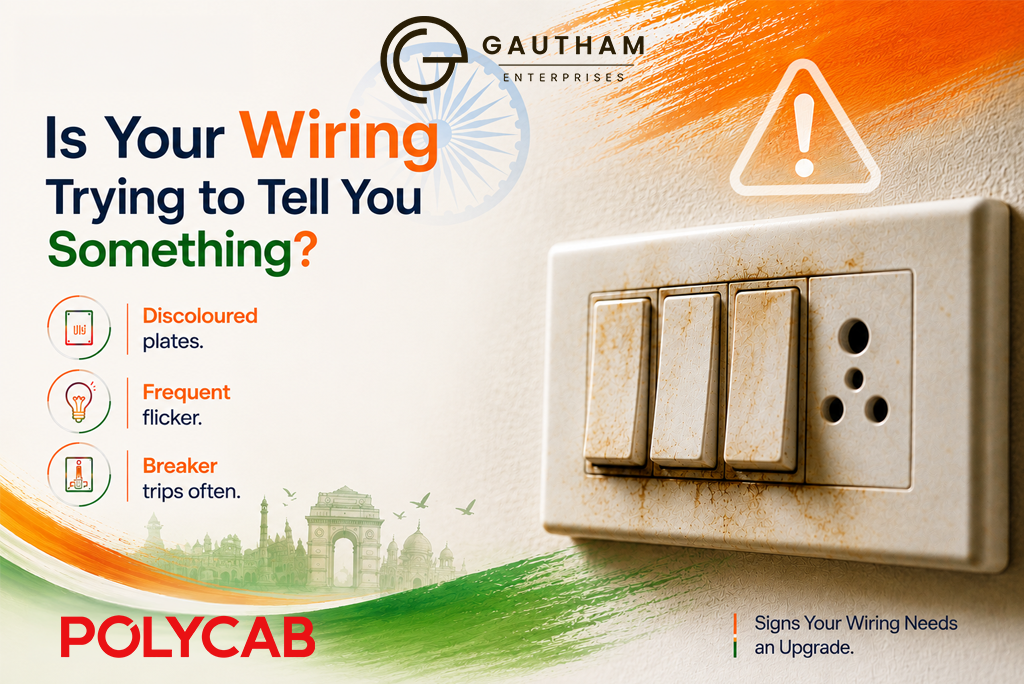
Electrical problems in a home often begin with small warning signs. Flickering lights, frequently tripping circuit breakers, discolored switch plates, or buzzing outlets should never be ignored. These symptoms can indicate overloaded circuits, loose connections, aging components, or outdated electrical wiring. Understanding these warning signs can help homeowners address potential hazards before they become serious. Flickering Lights and Tripping Breakers
What Causes Flickering Lights?
Flickering lights may occur for several reasons. A loose or damaged bulb is one of the simplest causes, but persistent flickering can point to a deeper electrical issue. Loose wiring connections, overloaded circuits, faulty switches, or an aging electrical panel may cause inconsistent power delivery.
If multiple lights flicker when large appliances such as air conditioners, refrigerators, or washing machines turn on, the circuit may be experiencing excessive electrical demand. In older homes, the existing wiring may not have been designed to handle the number of modern appliances and electronic devices used today.
Why Do Circuit Breakers Keep Tripping?
Circuit breakers are designed to protect electrical circuits from excessive current. When a breaker trips repeatedly, it may be responding to an overloaded circuit, short circuit, or electrical fault.
Occasional breaker trips can happen when several high-power appliances operate simultaneously. However, frequent trips should be investigated rather than repeatedly resetting the breaker. Continuing to operate an overloaded or faulty circuit can increase the risk of overheating and electrical damage.
Signs Your Wiring May Need an Upgrade
Flickering lights and tripping breakers are not the only warning signs. Homeowners should also watch for warm or discolored outlets, burning smells, buzzing sounds, sparks, loose switches, and frequently blown fuses.
Older electrical systems may lack sufficient capacity for today’s appliances and technology. Upgrading outdated wiring, switches, outlets, or electrical panels can improve reliability and provide better protection for your home. Energy-efficient BLDC fans
Protect Your Home With Professional Electrical Inspection
Electrical issues should be handled carefully. Avoid attempting complex wiring repairs yourself, especially if you are unfamiliar with electrical systems. A qualified electrician can inspect circuits, identify overloaded or damaged components, and recommend appropriate repairs or upgrades.
Recognizing the warning signs early can help prevent costly damage and improve electrical safety. If your lights frequently flicker or your breakers repeatedly trip, consider having your home’s wiring inspected before a minor issue develops into a major electrical problem.