




Modern homes rely on electrical systems for almost every aspect of daily life, from lighting and appliances to air conditioners, smart devices, entertainment systems, and home automation. With increasing electrical loads, choosing reliable polycab wires and cables is essential for safety, efficiency, and long-term performance.
Polycab wires and cables are widely used for residential electrical applications because they are designed to support dependable power transmission and help create safer electrical installations. Whether you are building a new home, renovating an existing property, or upgrading an electrical panel, selecting the right cable for each application can make a significant difference.
Why Electrical Wires Matter in Modern Homes
Electrical wires carry current throughout a property, connecting the main electrical supply to distribution boards, switches, sockets, lights, and appliances. Poor-quality or incorrectly selected wires can contribute to overheating, voltage drops, insulation damage, and other electrical risks.
Modern homes often have higher power requirements because of appliances such as refrigerators, washing machines, televisions, computers, water heaters, air conditioners, induction cooktops, and electric vehicle chargers.
This makes it important to choose wires based on the required load, installation environment, conductor size, insulation quality, and applicable electrical standards.
Polycab Wires and Cables: Built for Residential Applications
Polycab offers a broad range of electrical wires and cables designed for different applications. For residential projects, wires are commonly selected according to the circuit’s electrical load and intended use.
Lighting circuits generally have different requirements from circuits supplying high-power appliances. Similarly, wiring for air conditioners, geysers, kitchen equipment, and other heavy-load appliances may require appropriately sized conductors.
Choosing the right Polycab electrical wires helps ensure that the electrical system is properly suited to the demands placed on it.
Safety: A Key Consideration for Home Wiring
Electrical safety should always be a priority when selecting wires and cables. Quality insulation helps protect conductors from external conditions and reduces the risk of accidental contact.
For a residential electrical system, several factors contribute to safety:
- Appropriate wire size for the electrical load
- Reliable insulation
- Correct circuit protection
- Proper earthing
- Professional installation
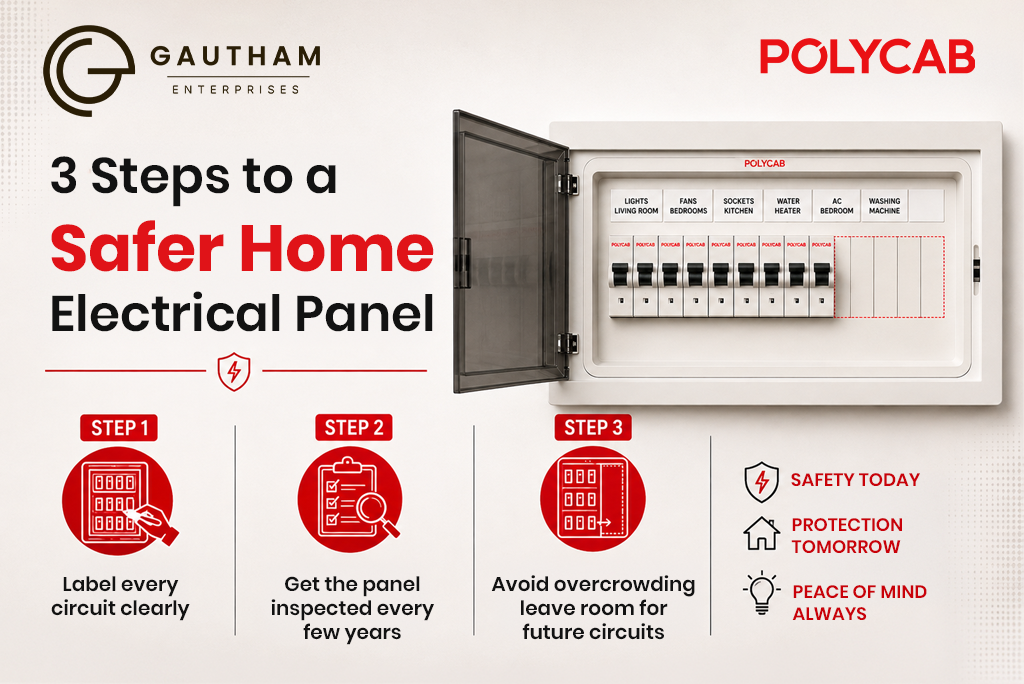
- Clearly labeled electrical circuits
- Regular inspection and maintenance
The electrical panel should also be organized properly. Labeling individual circuits makes it easier to identify lighting, kitchen, bedroom, air-conditioning, water-heater, and other connections during maintenance or emergencies.
Quality and Durability for Long-Term Performance
Electrical wiring is usually installed inside walls, ceilings, conduits, and other areas that are not easily accessible. Replacing damaged wiring can be expensive and disruptive. For this reason, homeowners should consider quality and durability when selecting electrical cables.
Polycab wires and cables can be considered for residential projects where dependable electrical performance and appropriate insulation are required. Selecting the correct product for the intended application is important for achieving consistent performance over time.
Quality wiring can also support the overall reliability of a home’s electrical infrastructure, especially as electrical demand increases.
Choosing the Right Polycab Wire for Your Home
Not every electrical circuit requires the same type or size of wire. Before purchasing wires, homeowners and contractors should assess the electrical requirements of the property.
Important factors include:
1. Electrical Load
Determine the expected power consumption of the circuit. High-load appliances may require larger conductors than lighting or standard socket circuits.
2. Wire Size
The appropriate conductor size should be selected according to the expected current, installation conditions, and applicable electrical requirements. An electrician can calculate the correct size for each circuit.
3. Application
Consider where the wire will be installed and what it will power. Lighting, sockets, air conditioners, kitchen appliances, and other equipment may have different wiring requirements.
4. Installation Environment
Temperature, conduit conditions, moisture, and other environmental factors can influence cable selection. The wire should be suitable for its intended installation environment.
5. Professional Installation
Even high-quality wires need to be installed correctly. Proper connections, routing, insulation, earthing, and circuit protection are essential for a safe electrical system.
Polycab Wires for Electrical Panels and Home Circuits
The electrical panel is the central point from which different circuits are distributed throughout a home. Properly planned wiring helps separate circuits according to their purpose and electrical load.
A well-organized panel can include separate circuits for lights, fans, sockets, kitchen appliances, water heaters, washing machines, air conditioners, and other major loads.
Using suitable Polycab wires for electrical panels and ensuring correct circuit protection can contribute to a more organized and dependable electrical installation.
Homeowners should also avoid overcrowding electrical panels and should leave appropriate capacity for future circuits. This is particularly useful for modern homes where additional appliances and smart electrical systems may be added later.
Performance and Energy Efficiency
Good electrical design is not only about safety. Properly sized and correctly installed cables can help maintain efficient power delivery throughout the property.
When a wire is not appropriately sized for its electrical load, excessive resistance can contribute to voltage drop and heat generation. This is why wire selection should be based on actual electrical requirements rather than simply choosing the cheapest or most convenient option.
Using suitable Polycab wires and cables for homes, combined with professional installation, can help support reliable electrical performance.
Planning for Future Electrical Needs
Modern homeowners should think beyond their current electricity requirements. Future additions such as home automation, additional air conditioners, electric kitchen appliances, solar systems, or electric vehicle charging can increase electrical demand.
When designing or renovating a home, leaving appropriate capacity for future circuits can make upgrades easier. An experienced electrician can help evaluate present and expected loads and recommend a suitable wiring plan.
Final Thoughts
Electrical wiring is one of the most important components of a modern home, even though much of it remains hidden behind walls and ceilings. Choosing suitable Polycab wires and cables can help homeowners build electrical systems focused on safety, quality, reliability, and long-term performance.
From individual circuits to electrical panels, every part of the installation should be properly planned and professionally executed. The right wire size, suitable insulation, proper circuit protection, effective earthing, and regular inspection all contribute to a safer home.
For homeowners planning a new electrical installation or renovation, working with a qualified electrician and selecting the appropriate Polycab products for each application can provide a strong foundation for a dependable modern electrical system.