




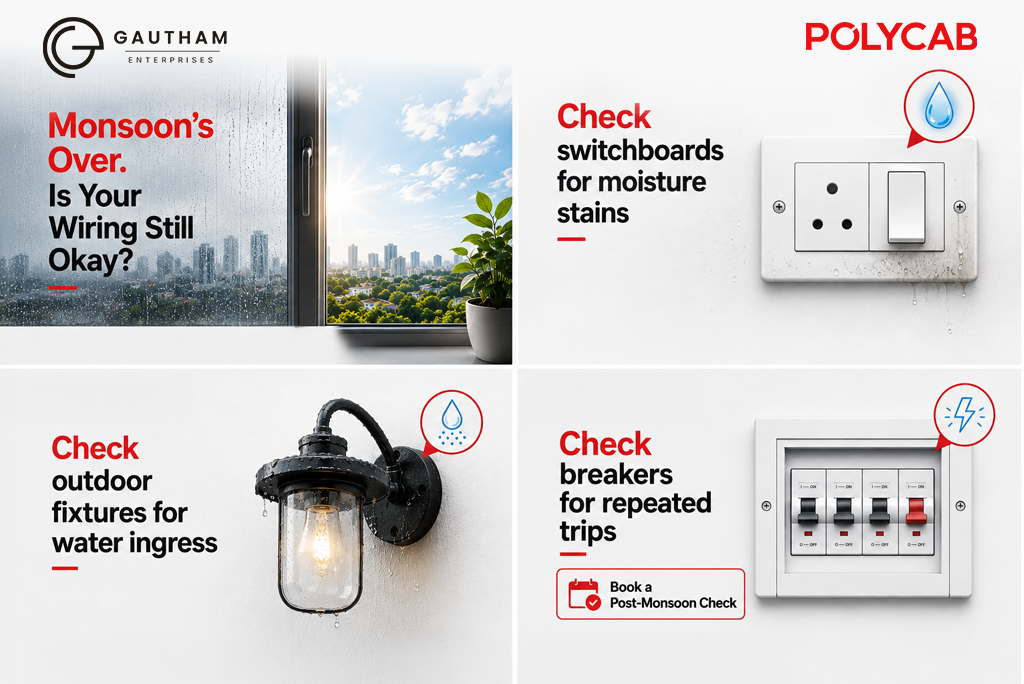
monsoon brings much-needed rain, but excessive moisture can create electrical safety concerns inside and around your home. Water seepage, damp walls, moisture near switchboards, damaged insulation, and water entering outdoor fixtures can increase the risk of electrical faults.
Once the rainy season is over, it is a good time to inspect your home’s electrical system. A simple post-monsoon electrical safety checklist can help identify visible problems before they become more serious.
For homeowners looking for reliable electrical solutions, Polycab is a well-known name in wires, cables and electrical products. However, even quality electrical components need proper installation, protection and regular inspection. Here is a practical checklist to help you assess your home’s electrical safety after the monsoon.
1. Inspect Electrical Wiring for Visible Damage
Start by checking exposed wiring throughout your home. Look for cracked, loose, frayed or damaged insulation, especially in areas that may have been exposed to rainwater or dampness.
Pay particular attention to wiring near windows, balconies, terraces, bathrooms and exterior walls. Water seepage can affect electrical installations and may contribute to insulation deterioration over time.
Avoid touching damaged wiring or attempting temporary repairs yourself. If you notice exposed conductors, burning marks or damaged insulation, contact a qualified electrician for an inspection.
2. Check Switchboards for Moisture Stains
Switchboards should be one of the first areas checked after heavy rainfall. Look for water marks, dampness, discoloration, rust, unusual warmth or signs of moisture around switches and sockets.
Moisture around an electrical switchboard can create potentially dangerous conditions. If a switchboard has been exposed to water, do not operate it unnecessarily.
A professional electrician can determine whether the switchboard, wiring or connected components need inspection or replacement.
3. Inspect Outdoor Electrical Fixtures
Outdoor lights, sockets and other electrical fixtures are particularly exposed to rain. Examine fixtures installed on balconies, gardens, exterior walls, terraces and entrances.
Check for:
- Water accumulation inside fixtures
- Cracked covers or housings
- Rust or corrosion
- Loose connections
- Damaged insulation
- Signs of water ingress
Weather-appropriate electrical equipment and proper installation can help reduce exposure to environmental conditions. Any fixture showing signs of water entry should be professionally inspected before continued use.
4. Check Your Electrical Breakers
Repeated circuit-breaker trips should never be ignored. If a breaker trips frequently after the monsoon, there could be an underlying issue involving moisture, wiring, appliances or an overloaded circuit.
Do not repeatedly reset a breaker without understanding why it has tripped. A qualified electrician should investigate recurring trips and identify the source of the problem.
Your electrical protection system is designed to respond to abnormal conditions, so unusual breaker behavior can be an important warning sign.
5. Look for Signs of Water Seepage
Electrical safety is closely connected to the condition of your home’s walls and ceilings. Inspect areas where rainwater may have entered through cracks, roofs, windows or exterior walls.
Look for damp patches, peeling paint, water stains or persistent moisture close to electrical points. If water seepage has reached wiring or electrical accessories, have the affected area checked by a professional.
Fixing the source of water infiltration is equally important. Otherwise, the electrical problem may return even after the visible damage has been repaired.
6. Examine Plugs, Sockets and Appliances
Post-monsoon electrical maintenance should also include plugs and sockets. Check for discoloration, burning smells, loose connections, cracked socket plates or unusual heating.
Outdoor appliances and extension connections require particular attention because they may have been exposed to rain or humidity.
Never use electrical appliances with wet hands or operate damaged sockets. Replace faulty components through a qualified professional rather than relying on temporary fixes.
7. Check for Unusual Electrical Warning Signs
Your home may provide several warning signs when an electrical system requires attention. These can include flickering lights, buzzing sounds, burning smells, warm switches, sparks or frequent breaker trips.
While some issues may appear minor, they can indicate problems with wiring, connections or electrical loads.
If you notice any unusual electrical behavior, switch off the affected circuit when it is safe to do so and arrange for professional inspection.
8. Schedule a Professional Electrical Inspection
A visual inspection is useful, but it cannot identify every electrical problem. After a particularly heavy monsoon, consider having a qualified electrician inspect important parts of your electrical installation.
Professional inspection can help identify problems that may not be immediately visible, including damaged connections, insulation concerns, grounding issues or moisture-related faults.
If your home is older or has experienced water leakage, a more thorough electrical assessment can be especially valuable.
Conclusion
The end of the monsoon is the right time to give your home’s electrical system some attention. From checking switchboards for moisture stains to inspecting outdoor fixtures and investigating repeated breaker trips, these simple steps can help identify potential electrical concerns early.
Using quality electrical components, ensuring proper installation and arranging professional inspections when needed are important parts of responsible home maintenance. A structured Polycab post-monsoon electrical safety checklist can make it easier to review your home’s wiring and electrical points systematically.
Most importantly, never attempt to repair exposed or water-damaged electrical wiring yourself. When in doubt, turn to a qualified electrician to keep your home safe and your electrical system functioning reliably.