





Walk past a damp patch on your wall often enough, and it starts to feel like background noise — a cosmetic issue you’ll “deal with eventually.” But that discolored, slightly musty corner of your home isn’t just an eyesore. It’s a slow-moving safety hazard, especially when it sits near electrical switches, sockets, or wiring. damp walls electrical safety
Damp walls and electrical safety are more closely connected than most homeowners realize. What starts as a minor moisture problem can quietly progress into a serious electrical risk — one that often goes unnoticed until it’s too late. Understanding this connection is the first step toward keeping your home, and the people in it, safe.
What Causes Damp Walls in the First Place?
Before addressing the danger, it helps to understand why walls get damp at all. Common causes include:
- Rising damp — moisture traveling upward from the ground through porous building materials
- Leaking pipes or plumbing — hidden leaks inside walls that surface as damp patches
- Poor ventilation — trapped humidity, especially in bathrooms and kitchens
- Roof or window leaks — water seeping in from above and travelling down walls
- Condensation — temperature differences causing moisture to collect on interior surfaces
Whatever the source, once water gets into your walls, it doesn’t stay contained to the surface. It seeps deeper, often reaching electrical conduits, wiring, and fittings embedded within the wall structure.
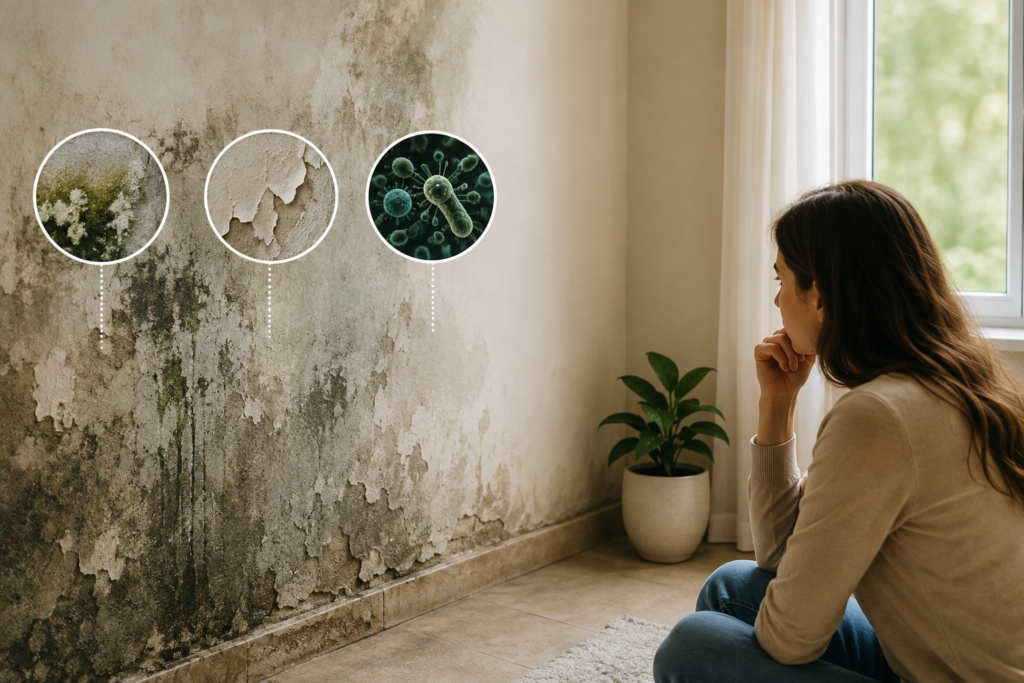
How Damp Walls Damage Electrical Fittings
This is where a seemingly harmless damp patch turns into a genuine safety concern. Electrical systems and moisture are a dangerous combination, and here’s why:
Corrosion of Wires and Connections
Moisture accelerates corrosion in copper wiring and metal fittings. Over time, corroded wires lose conductivity, overheat more easily, and become significantly more likely to fail.
Compromised Insulation
The insulation around electrical wires is designed to keep moisture out. Prolonged dampness breaks down this insulation, exposing live wires and increasing the risk of short circuits.
Increased Risk of Electric Shock
Water is an excellent conductor of electricity. When damp reaches a switchboard, socket, or exposed wiring, it creates a real risk of electric shock for anyone who touches that fitting — even something as routine as flipping a light switch.
Fire Hazards
Short circuits caused by damp-damaged wiring are a known trigger for electrical fires. A slow leak behind a wall can, over months or years, set the stage for a fast-moving emergency.
Reduced Lifespan of Appliances and Fittings
Even without immediate failure, chronic exposure to moisture shortens the working life of switches, sockets, MCBs, and connected appliances — leading to more frequent replacements and repairs.
Warning Signs You Shouldn’t Ignore
Catching damp early — before it reaches your electrical system — is far easier and cheaper than fixing the damage afterward. Watch for:
- Discoloured or peeling patches on walls, especially near sockets and switches
- A musty, damp smell in a room
- Switches or sockets that feel warm, buzz, or spark
- Flickering lights or frequent tripping of circuit breakers
- Visible mold growth around electrical fittings
- Bubbling or blistering paint near outlets
If you notice any of these signs, especially in combination, it’s worth treating it as an electrical safety issue, not just a cosmetic one.
What You Can Do to Stay Safe
1. Address the Moisture Source First
Fixing the damp problem — whether it’s a leak, poor drainage, or ventilation issue — is the only real long-term solution. Painting over a damp patch without solving the underlying cause simply delays the problem.
2. Get Electrical Fittings Inspected
If damp has been present near switches, sockets, or wiring for any length of time, have a qualified electrician inspect the area. Don’t wait for visible sparking or a tripped breaker to take action.
3. Choose Quality, Moisture-Resistant Fittings
Not all electrical fittings handle moisture equally well. Investing in fittings from trusted brands built for durability can reduce risk, particularly in damp-prone areas like bathrooms, kitchens, and basements.
4. Improve Ventilation
Simple steps like using exhaust fans, opening windows regularly, and ensuring proper airflow can prevent condensation-related dampness from building up in the first place.
5. Don’t DIY Electrical Repairs Near Damp Areas
Damp and electricity is not a combination to troubleshoot yourself. Always call a licensed electrician for any repair or inspection work involving moisture-affected wiring or fittings.
The Bottom Line
A damp wall might seem like a problem you can put off. But when that dampness sits near your home’s electrical system, the timeline for “dealing with it eventually” shrinks considerably. Damp today really can become dangerous tomorrow — corroded wiring, damaged insulation, and increased fire or shock risk don’t announce themselves loudly until something goes wrong.
The good news is that this is a preventable risk. Spotting the early signs, addressing moisture at its source, and getting electrical fittings properly inspected can save you from costly repairs — and more importantly, keep your home and family safe.