




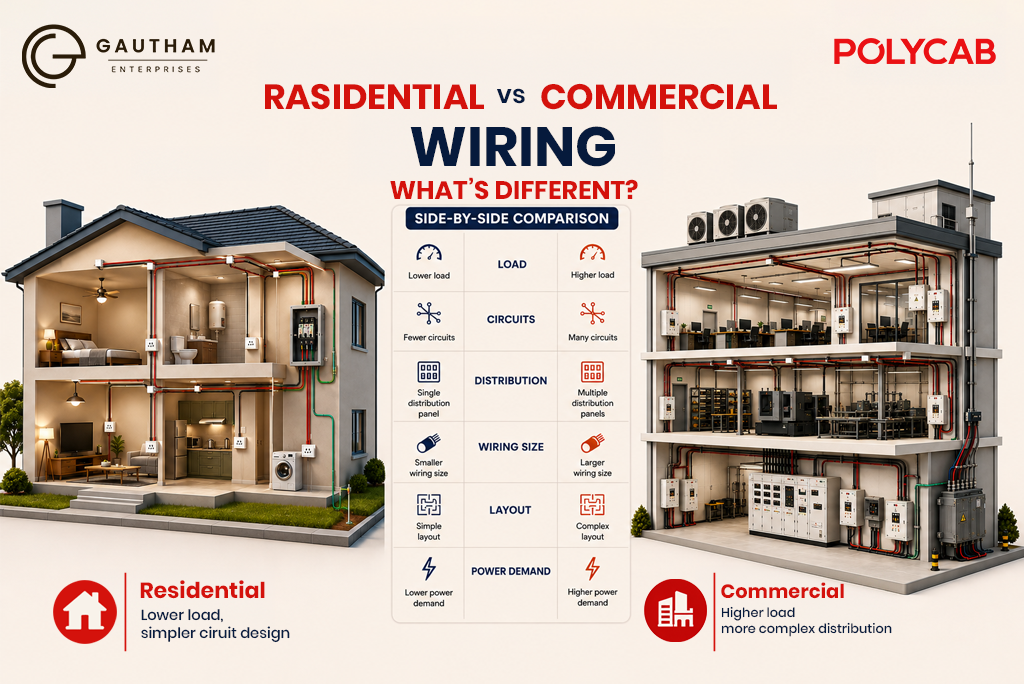
Electrical systems are an essential part of every building, but the wiring requirements for a home are significantly different from those of a commercial facility. Understanding the difference between residential vs. commercial electrical systems can help property owners, builders, contractors, and businesses make better decisions about wiring, electrical loads, distribution, and safety.
Residential buildings typically have simpler electrical requirements, while commercial properties often need more complex systems to support higher power demand, multiple circuits, equipment, lighting, and electrical distribution panels.
Choosing the right wiring system is important for reliable performance, efficient power distribution, and long-term electrical safety.
What Is Residential Electrical Wiring?
Residential electrical wiring is designed primarily for homes, apartments, and other living spaces. The electrical requirements are generally based on household appliances, lighting, entertainment systems, air conditioning, kitchen equipment, and other everyday electrical loads.
A typical residential property has a relatively simple circuit layout compared with a commercial building. Individual circuits may be provided for lighting, outlets, kitchens, air conditioners, water heaters, and other high-demand appliances.
Residential wiring generally focuses on providing safe and dependable electricity throughout the home while keeping the system practical and manageable.
What Is Commercial Electrical Wiring?
Commercial electrical wiring is designed for offices, retail stores, factories, warehouses, restaurants, educational facilities, and other business environments.
Commercial buildings can have substantially higher electrical demands because they may operate numerous lights, computers, HVAC systems, machinery, elevators, security systems, and other equipment simultaneously.
As a result, commercial electrical systems usually require more circuits, larger distribution systems, and more structured electrical planning than residential installations.
Residential vs. Commercial Electrical Systems: Key Differences
Understanding the major differences between residential and commercial wiring can help explain why one system should not simply be substituted for the other.
1. Electrical Load
One of the biggest differences is electrical load.
Residential properties generally have lower overall power requirements. Although modern homes can use considerable electricity, the load is usually distributed across household appliances and lighting circuits.
Commercial buildings often have significantly higher loads because of business equipment, HVAC systems, machinery, lighting, computers, and other electrical devices.
Therefore, commercial electrical systems must be designed to handle higher and sometimes continuously changing power requirements.
2. Number of Circuits
Homes typically have fewer circuits because their electrical needs are relatively straightforward.
Commercial properties may require numerous dedicated circuits for different departments, equipment, floors, lighting systems, and machinery. This makes commercial circuit planning more complex.
Proper circuit separation can also make troubleshooting, maintenance, and future expansion easier.
3. Distribution Systems
Residential electrical systems often use a primary distribution panel to supply electricity to different circuits throughout the house.
Commercial properties may use multiple distribution panels and more complex electrical distribution arrangements. Larger facilities can require dedicated electrical rooms, specialized equipment, and carefully planned distribution networks.
This difference becomes particularly important when a building has multiple floors or high-power equipment.
Wiring Size and Cable Selection
Another important difference between residential and commercial electrical systems is cable selection.
The appropriate wire or cable size depends on factors such as electrical load, circuit length, installation conditions, and applicable electrical requirements.
Commercial projects may require larger conductors or specialized cable systems because of higher power demands and longer distribution distances.
Using an incorrectly sized cable can affect electrical performance and safety. Therefore, wire selection should always be based on the actual requirements of the installation and appropriate professional calculations.
Layout and Installation Complexity
Residential wiring generally follows a simpler layout. Electrical outlets, switches, lights, and appliances are distributed according to the requirements of the home’s rooms and living spaces.
Commercial wiring can be much more complicated. A commercial facility may require separate systems for lighting, HVAC, machinery, communications, emergency systems, security equipment, and other building functions.
The wiring layout must also accommodate the building’s operational requirements and potential future expansion.
Electrical Safety Considerations
Safety is important in both residential and commercial electrical installations.
In residential properties, electrical safety involves appropriate wiring, circuit protection, grounding, suitable outlets, and professional installation.
Commercial buildings require additional planning because of their higher electrical loads and greater system complexity. Electrical panels, cables, equipment, circuits, and distribution systems must be appropriately selected and installed.
Regular inspection and maintenance can also help identify potential electrical problems before they become serious issues.
Choosing the Right Wires and Cables
Selecting quality wires and cables is an important part of building a reliable electrical system. Products should be selected according to the required load, application, installation environment, and relevant specifications.
For both residential and commercial projects, using genuine electrical wires and cables from trusted manufacturers can help support reliable performance and durability.
However, choosing the correct product is only one part of the process. Proper design, installation, circuit protection, and maintenance are equally important.
Why Professional Electrical Planning Matters
Electrical systems should be planned according to the building’s actual requirements rather than using a one-size-fits-all approach.
For residential projects, professionals can calculate expected household loads and determine appropriate circuits and cable sizes.
For commercial projects, electrical planning may involve detailed load calculations, distribution design, equipment requirements, and provisions for future expansion.
Professional installation also helps ensure that wiring and electrical equipment are installed correctly and safely.
Residential vs. Commercial Wiring: Which Is Right for Your Project?
The answer depends entirely on the type of building and its electrical requirements.
A residential system is generally suitable for homes and living spaces where the electrical load and distribution requirements are relatively straightforward.
A commercial system is designed for properties that require higher power capacity, more circuits, more complex distribution, and potentially specialized electrical equipment.
Trying to use residential-style wiring for a commercial application can result in an inadequate electrical system. Similarly, designing a small residential property with unnecessarily complex commercial infrastructure may increase costs without providing meaningful benefits.
Conclusion
Understanding residential vs. commercial electrical systems is essential when planning a safe and reliable electrical installation. Residential systems generally involve lower loads, fewer circuits, simpler layouts, and straightforward distribution.
Commercial systems typically involve higher electrical loads, more circuits, larger distribution networks, and greater installation complexity.
Regardless of the project type, selecting the appropriate wires and cables, planning circuits correctly, and following professional electrical installation practices are essential for dependable performance and safety. By matching the electrical system to the building’s actual requirements, property owners can create an infrastructure that is reliable, efficient, and ready to meet present and future power needs.